

CMS Innovation Center · solo Designer
An MVP redesign that brought structure and consistency to a site unchanged since 2014, making it easier for health providers to find, understand, and act on program information.
2 weeks
Full discovery with repository
1.9K pages
Restructured IA delivered
4 weeks
High fidelity mockups ready for testing
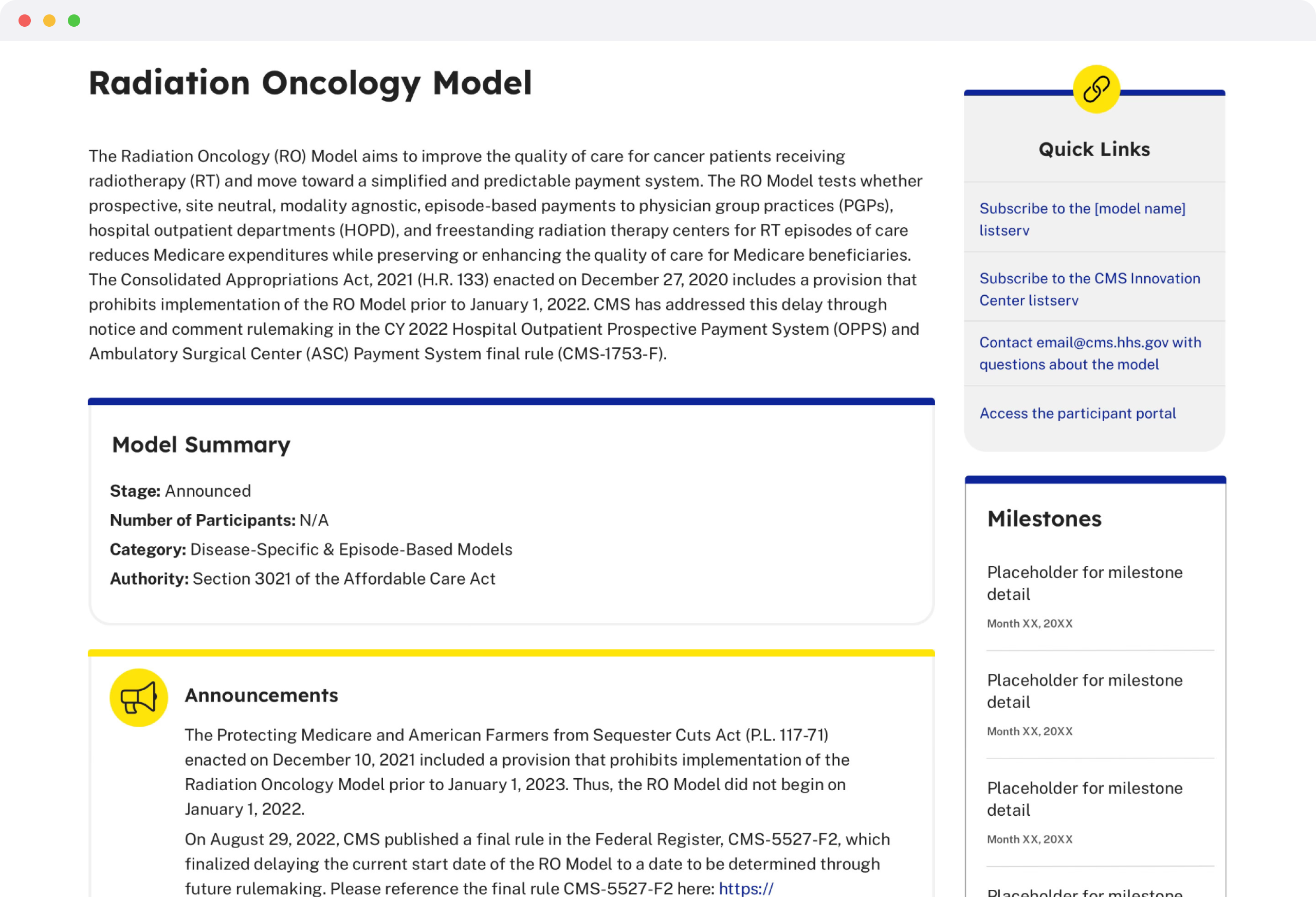
As solo designer, I contributed equally across research, facilitation, and design.
Problem
The CMS Innovation Center website hadn't been meaningfully updated since 2014. With 80K monthly visitors, the site was falling short in a measurable way.
Users were struggling to locate information that already existed on the site, leading them to email CMMI staff directly with questions. Voice of Consumer survey feedback consistently flagged content as overwhelming, insufficient, or confusing.
Staff had begun creating their own workaround FAQ pages to manage the volume — a clear signal that the content strategy needed revisiting.
The content had no consistent structure; the same information was presented differently across pages, making it hard to scan, hard to maintain, and hard for search engines to index accurately. There were over 1,900 pages on the site that lacked a sensible IA.
How might we...
help health providers quickly locate the program information they need and take action confidently — without having to contact staff to get answers?
Goals
For health providers trying to enroll in CMS innovation programs, a confusing site wasn't just a frustration, it was a barrier.
User goals
Business goals
Process
The discovery was thorough, the timeline was tight, and the findings were clear.
Discovery combined quantitative data from Google Analytics with a thorough qualitative effort: Voice of Consumer survey analysis, stakeholder interviews, an accessibility audit, heuristics evaluation, and content, IA, and ROT audits.
Key insight
The through-line across all of it was fragmentation: content, portal access, and institutional knowledge had migrated out of the site and into staff inboxes and workaround pages. That finding drove the core design decision: consolidate and surface, rather than add.

I created user profiles for the site's primary audiences
With a constrained timeline, I prioritized the highest-leverage activities; the ROT analysis and stakeholder interviews gave the team a shared picture of how to move forward.
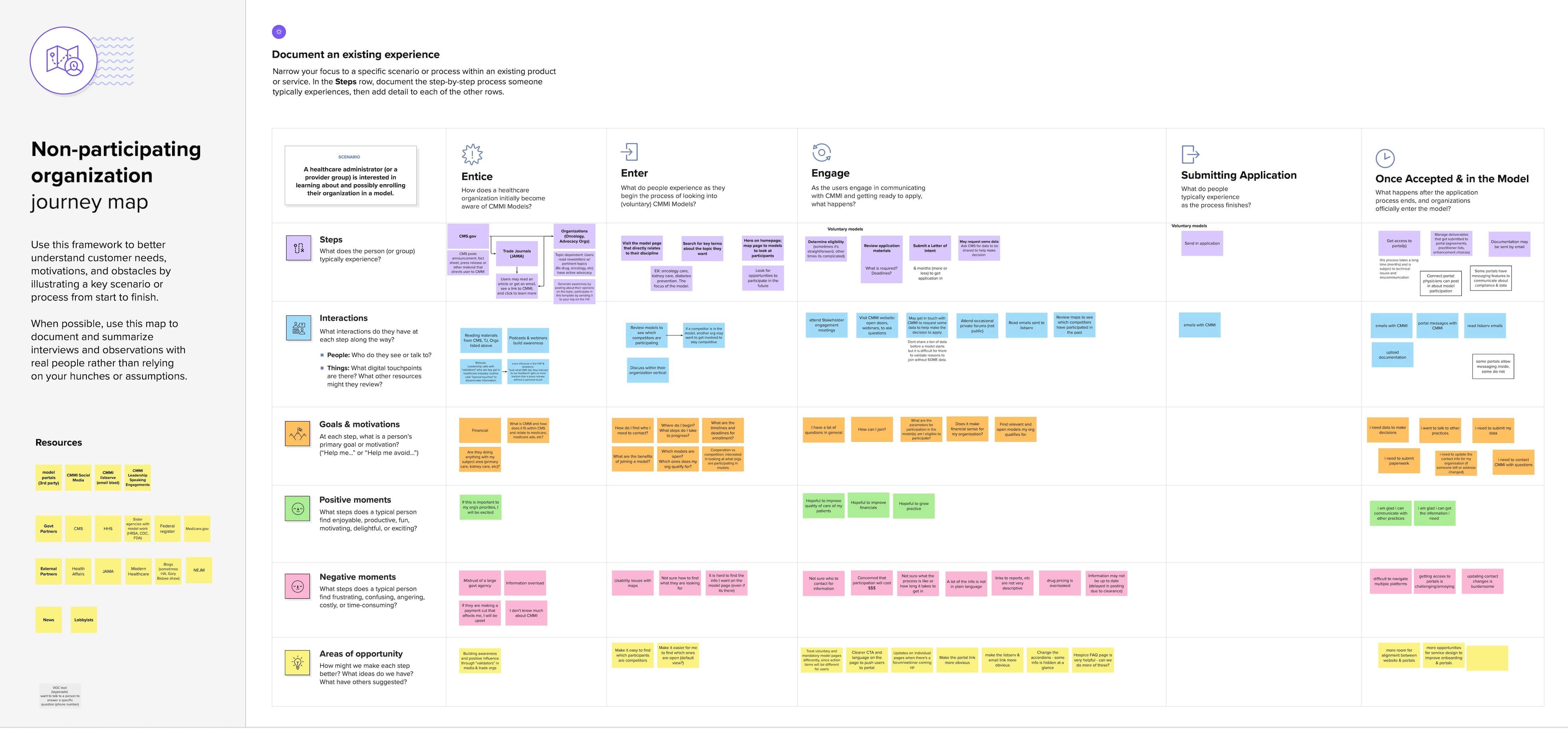
The culmination of multiple working sessions allowed me to build a journey map
Key directions explored:
Solution
The redesign consolidated a decade of fragmented content into a structured, scalable system — with a rebuilt IA, redesigned model pages, and simplified portal access pathways built on the new design system.
Information architecture
The information architecture was the first place to start, since there were over 1,900 pages to evaluate. We knew the IA would break once the migration happened.
Our immediate focus was on basic hierarchical and URL changes to organize content structure. We found:

before
A quick visualization helped demonstrate the flat IA issue, without getting into details in spreadsheets
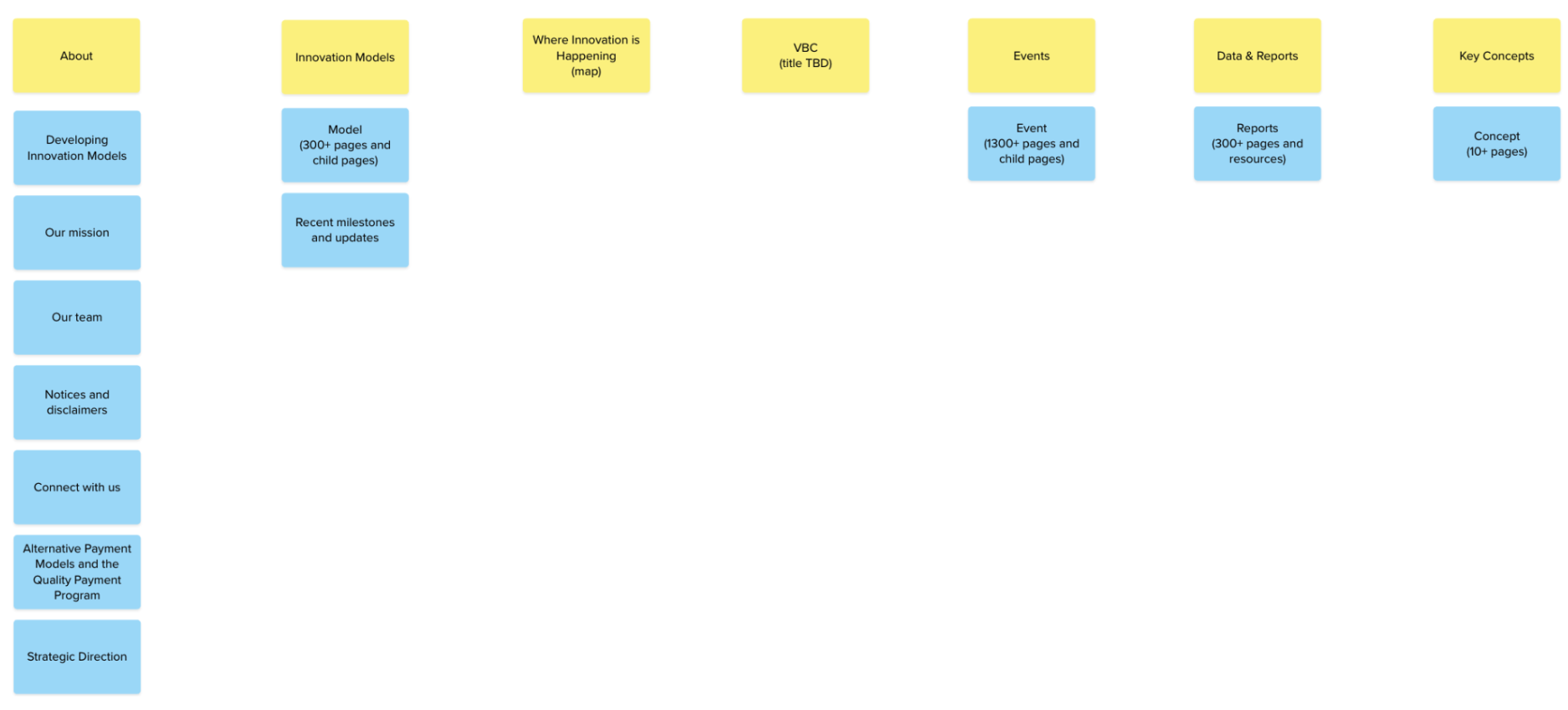
The new IA was planned to have 7 top-level pages, with a more clear URL structure, which will make content more findable and be easier for engineering to maintain
Search experience
The search and filtering experience was archaic and not easily findable. Users needed to have ways to do both text search and filter down results. We found:

BEFORE
The search page was designed in 2014 (and looked like it)
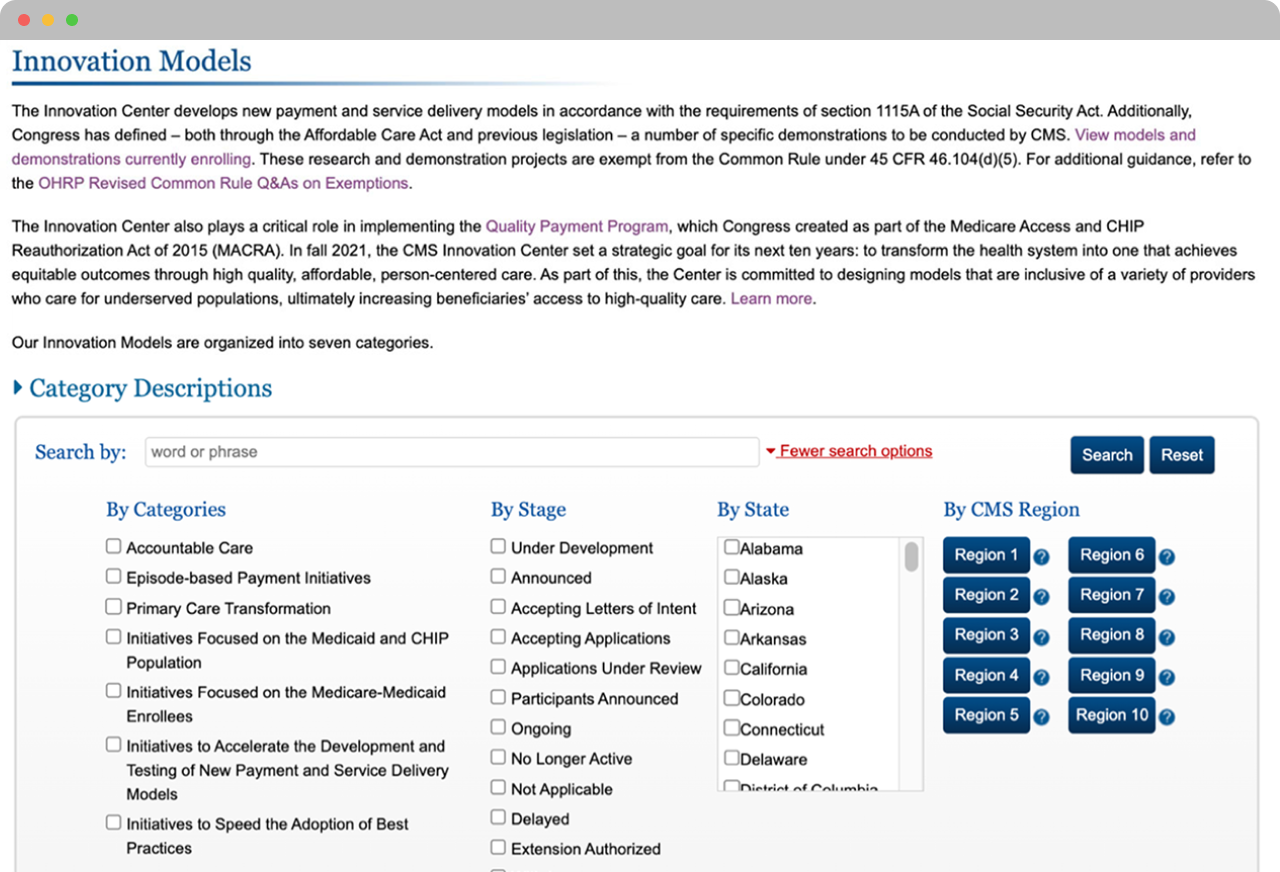
BEFORE
The search page included a large filtering mechanism that was hidden

After
Search was overhauled with more effective, user-centered features, and matched the CMS Design System

after
The category filtering was moved to the left column for visibility and ease of use
AFTER
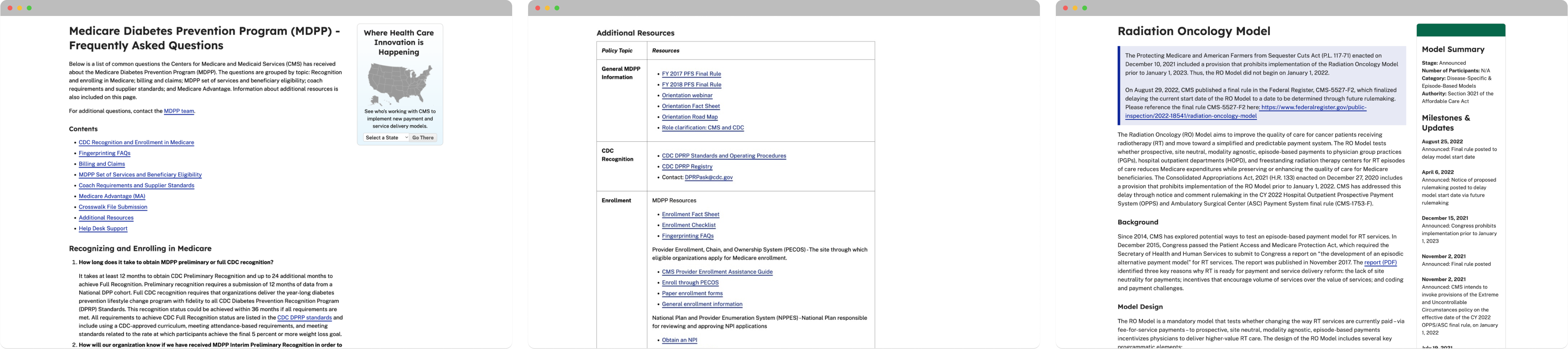
Switching to the CMS Design System did not sufficiently improve user experience. Examples show how different the user experience was across content pages within the site; many pages included lists of hyperlinks to reports, and the editors had written FAQ pages because the original pages became long and cumbersome.
Content
Even after the site migration to use the design system, the content problem was not solved. We needed to improve the user experience once they landed on a page they were interested in.
The department had multiple writers and editors, and the solution needed to provide enough flexibility for it to meet their needs. We learned:
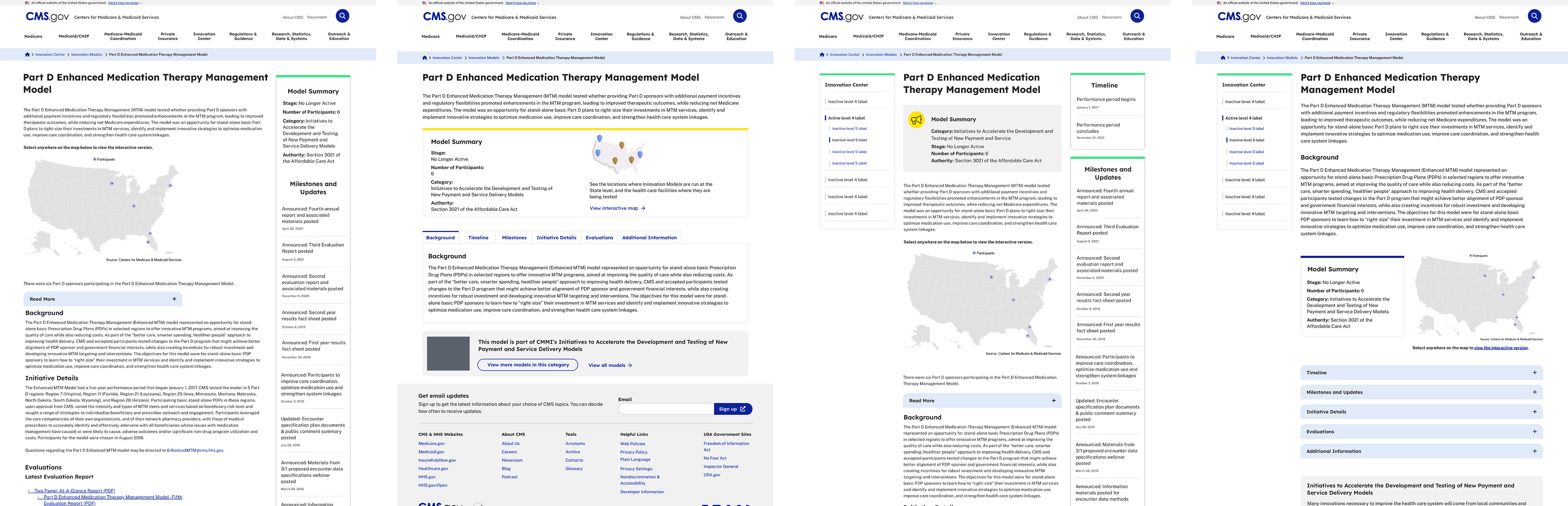
IDEATION
Iterations for a flexible, structured framework that accounted for the types of content
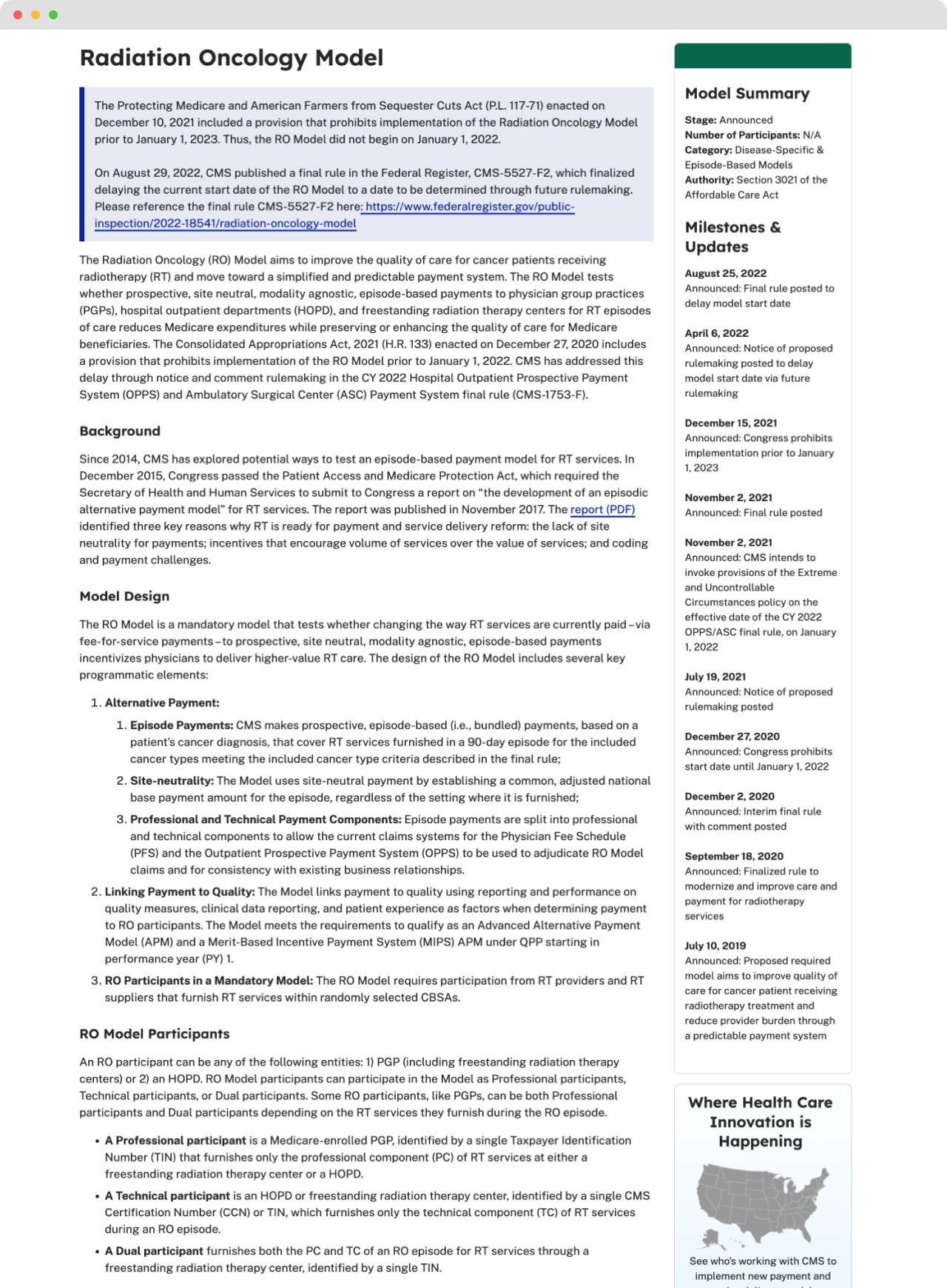
before
Switching to the CMS Design System did not sufficiently improve user experience

after
With the redesign, Design System components were leveraged, information was segmented by priority, and accordions made the pages scannable and interactive
Impact
High-fidelity mockups completed and ready for testing in 4 weeks.
This project was scoped as an MVP, and I transitioned to another engagement before launch due to engineering delays — so post-launch behavioral data wasn't available to me. The natural next measurement would be staff contact volume and user self-service rates, which would show whether consolidating the content actually reduced the burden this project set out to solve.
Delivered on time despite a compressed timeline
Consolidated a decade of fragmented content
Established a scalable foundation for future iterations
Learnings
01
Workarounds are a research signal.
When staff are building FAQ pages to compensate for a broken site, that's one of the clearest indicators a UX team can get that the IA isn't working.
02
ROT analysis aligns teams fast.
On a constrained timeline, identifying what to remove, fix, and defer was more valuable than generating new ideas.
03
This project was scoped as an MVP with future work in a roadmap.
We made the decision to ship on time and iterate rather than delay for a complete solution. I transitioned to another project prior to launch due to engineering delays.
The rest of this case study includes client-sensitive details. Enter the password to keep going, or scroll back up to revisit the overview.